Cosmetic dentistry reshapes the look of your smile, from whitening and veneers to implants and full smile makeovers. At Dentistry Today, your care is led by Dr. Leslie Barrilleaux, the only AACD-accredited cosmetic dentist in Alabama, with offices in Huntsville and Scottsboro.
Not sure where to start? Most people begin with a consultation and a free digital smile preview, so you can see the change before committing to any treatment.

Most dentists can whiten a tooth or place a veneer. Very few carry accreditation from the American Academy of Cosmetic Dentistry. Dr. Leslie Barrilleaux holds it, and she is the only AACD-accredited cosmetic dentist in the state of Alabama. Fewer than 600 dentists nationwide have earned it.
That matters because cosmetic dentist is not a protected title. Any licensed dentist can use it. AACD accreditation is different. It takes years of case work, written exams, and a panel of peers reviewing real patient results before they sign off. It is proof of the artistic side of the work, not just the clinical side.
Dr. Barrilleaux has spent more than 25 years in private practice. She graduated with honors from the University of Louisville School of Dentistry, started out in Scottsboro, opened Dentistry Today in Huntsville, and came back to open a second Scottsboro office in 2021. Both offices are hers, and patients across North Alabama are seen by the same accredited hand. When your front teeth are involved, that track record is the difference between a smile that looks done and one that looks like it grew that way.

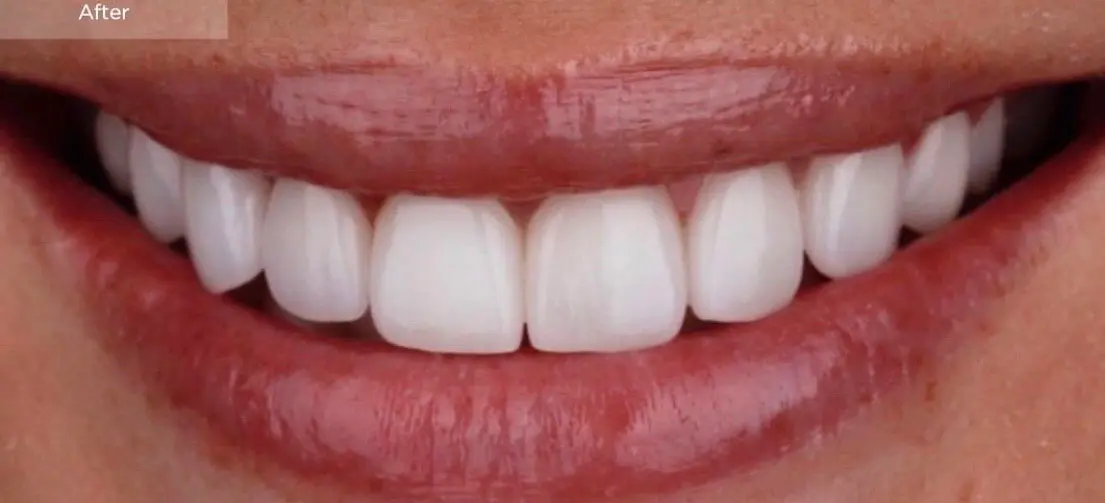
Photos show actual patients and are not a guarantee of any specific outcome.
Because the title is not protected, the useful thing is knowing what to ask. These five questions separate a considered choice from a coin toss, wherever you end up going.
We are happy to answer all five at a consultation, and you can see our own cases in the before and after gallery.
Cosmetic work lives or dies on the details: shade, shape, proportion, the way light catches an edge. Two things set our work apart. The accredited eye that designs your smile, and the lab that builds it under the same roof.
We plan each case fully before anything is permanent. It is easier to get the shade and shape right at the planning stage than after a veneer is bonded to your tooth.
Cosmetic dentistry is dental work done mainly to improve how your smile looks: its color, shape, alignment, spacing, and how even it is. The American Dental Association’s consumer resource groups these under treatment focused on appearance rather than on fixing a health problem, though the line between the two is often blurry. A chipped front tooth is a cosmetic concern and a structural one.
General dentistry keeps your mouth healthy: cleanings, fillings, root canals. Cosmetic dentistry takes a healthy mouth and makes it look the way you want. Most patients need a little of both, and we sort out any health issues first so cosmetic results last.
We cover the full range of cosmetic options at both offices. Here is what each one does.
Not sure where you land? Start with what bothers you, then match it to a treatment. This is a general guide, not a diagnosis. The right answer depends on an exam.
| What you want to fix | Common treatment |
|---|---|
| Stained or discolored teeth | Teeth whitening |
| A small chip or minor gap | Dental bonding or porcelain veneers |
| Crooked or crowded teeth | Clear aligners |
| A missing tooth | Dental implant |
| A worn, cracked, or broken tooth | Same-day crown |
| A full front-tooth redesign | Veneers or a smile makeover |
Most healthy adults are candidates. If your teeth are stained, chipped, gapped, crooked, worn, or you are missing one, there is almost always an option that fits. The first step is an exam, not a treatment.
A few things get handled before cosmetic work starts. Active gum disease has to be treated first, because you cannot build a lasting result on an unhealthy foundation. If you grind or clench at night, we plan for it, since bruxism can crack veneers and wear down bonding, and a nightguard often becomes part of the plan. Untreated decay gets fixed first too. We will tell you honestly if a treatment is the wrong call for what you want.
Cost depends on the treatment and how many teeth are involved. Whitening sits at the low end. Veneers and implants sit higher, and a full smile makeover is priced case by case.
For rough context, national figures published by Forbes Health and the ADA run in these ranges: professional whitening roughly a few hundred dollars, porcelain veneers commonly around $900 to $2,500 per tooth, and dental implants often $3,000 to $5,000 per tooth. Those are national averages, not our quote. Your written estimate comes after an exam.
If paying all at once is a stretch, financing can spread the cost over time. Ask us about the current options when you call. Book your cosmetic consultation · 256-529-5179
Usually not, and that catches people off guard. Dental insurance is built to cover treatment you need for health, so purely cosmetic work like whitening, veneers, and bonding is typically paid out of pocket. There is a gray area. When a treatment restores function as well as looks, such as a crown on a cracked tooth or an implant for a missing one, part of it may be covered. We will check your plan and tell you what applies before you commit.
One accredited cosmetic dentist, with an office on Madison Boulevard in Madison and a second in Scottsboro. Pick the page closest to you. You can also browse our before and after gallery and read patient reviews.
Both offices are open Monday through Friday, 9am to 5pm. Same accredited care, same in-house lab, whichever door you walk through. Call 256-529-5179 to book, or use the office pages above to find directions and hours.
Call Dentistry Today · 256-529-5179
Every cosmetic dentist is a general dentist first; the term describes a focus, not a separate license. General dentistry keeps your mouth healthy, while cosmetic dentistry is aimed at how your smile looks. Because cosmetic dentist is not a protected title, the real signal of skill is accreditation: Dr. Barrilleaux is the only AACD-accredited cosmetic dentist in Alabama. Ask any dentist what training backs the label.
It depends entirely on the treatment, from a few hundred dollars for whitening to several thousand for veneers or implants. National averages from Forbes Health and the ADA put veneers around $900 to $2,500 per tooth and implants near $3,000 to $5,000, though those are not our quote. Your price also depends on how many teeth are involved. We give a written estimate after an exam, and financing can spread the cost.
Usually no, because dental insurance is built to cover treatment you need for health, not elective cosmetic work. Whitening, veneers, and bonding are typically out of pocket. The exception is work that also restores function, like a crown on a cracked tooth or an implant, which may be partly covered. We check your plan and tell you what applies before you commit.
Teeth whitening is the most common, because it is fast, non-invasive, and the lowest cost way to change how a smile looks. Professional whitening lifts stains far past a drugstore kit and is often the first step before other work. For a bigger change, porcelain veneers are the most requested, since they fix color, shape, and spacing at the same time.
It varies by treatment. Porcelain veneers and crowns commonly last 10 to 15 years or more with good care, while bonding tends to last a few years before it needs a touch-up. Whitening fades gradually and is usually refreshed every year or two, depending on your coffee and wine habits. Nightguards, cleanings, and avoiding hard chewing on front teeth all stretch the lifespan.
The main downsides are cost, that insurance rarely helps, and that some treatments are permanent. Veneers, for example, involve reshaping a thin layer of enamel that does not grow back, so it is a lasting commitment. Some patients have short-term tooth sensitivity after whitening or veneer prep. A thorough exam up front avoids the bigger risk, which is starting cosmetic work before an underlying health issue is treated.