Book your implant consultation · (256) 529-5179 Request an appointment online
A missing tooth is more than a gap in a photo. It changes how you chew, shifts the teeth on either side, and over time the jawbone underneath starts to shrink. An implant is the one option that replaces the root as well as the crown, which is why it looks and works closest to a natural tooth. Dr. Leslie Barrilleaux has run the practice for more than 25 years, and we plan every implant with 3D imaging before any surgery is scheduled.
Dr. Leslie Barrilleaux, DMD, graduated with honors from the University of Louisville School of Dentistry and has practiced for more than 25 years. She is the only AACD-accredited cosmetic dentist in Alabama, a credential fewer than 600 dentists nationwide hold. Implants are as much a cosmetic result as a functional one, because the crown on top has to match the teeth around it. That is where the accreditation earns its keep.
You see the same dentist from the planning scan through the final crown. Continuity matters with implants more than almost any other treatment, since the process runs over several months and the person who placed the implant should be the one who restores it. We also keep an in-house dental lab, so many implant crowns and prosthetics are made on site rather than shipped to an outside shop. That keeps the fit and shade under our control and often shortens the wait. New Madison patients are welcome for implant consultations, and we will pull your prior records and any recent X-rays if you tell us where you were seen.
Two tools change the day-to-day experience for implant patients here, and one of them is genuinely uncommon in a general practice.
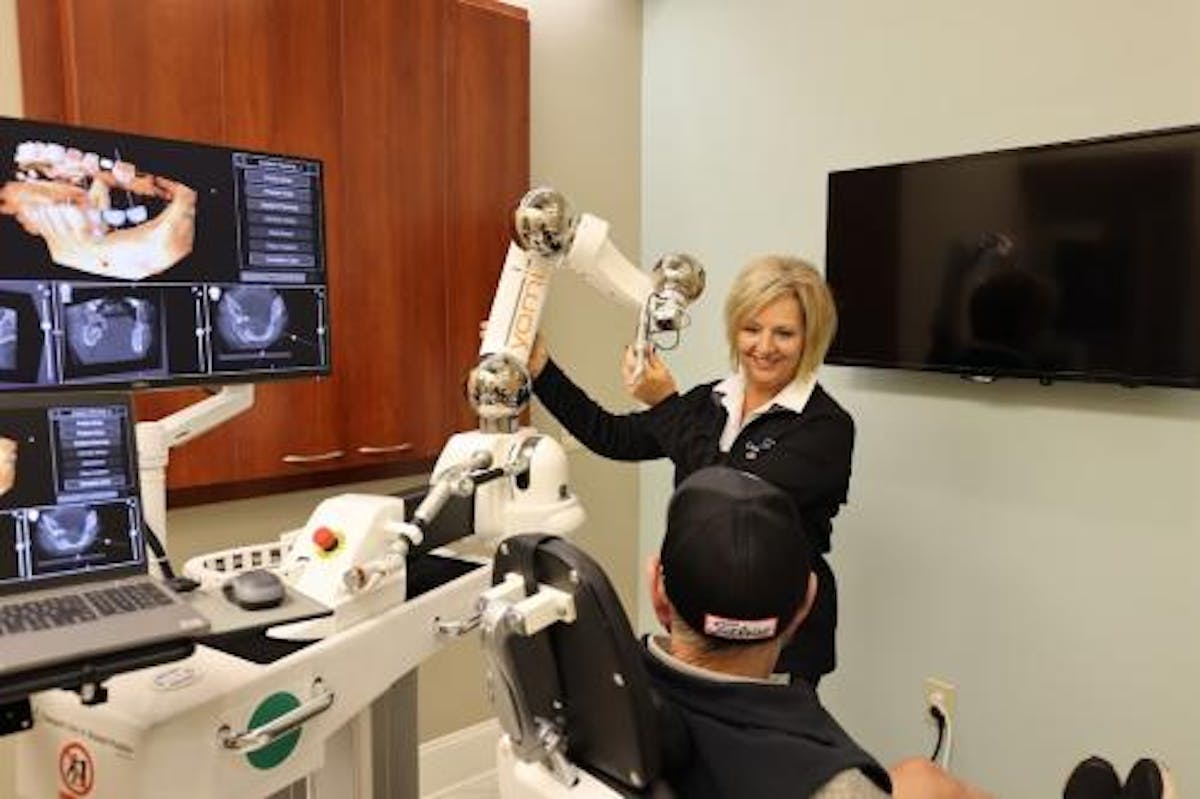
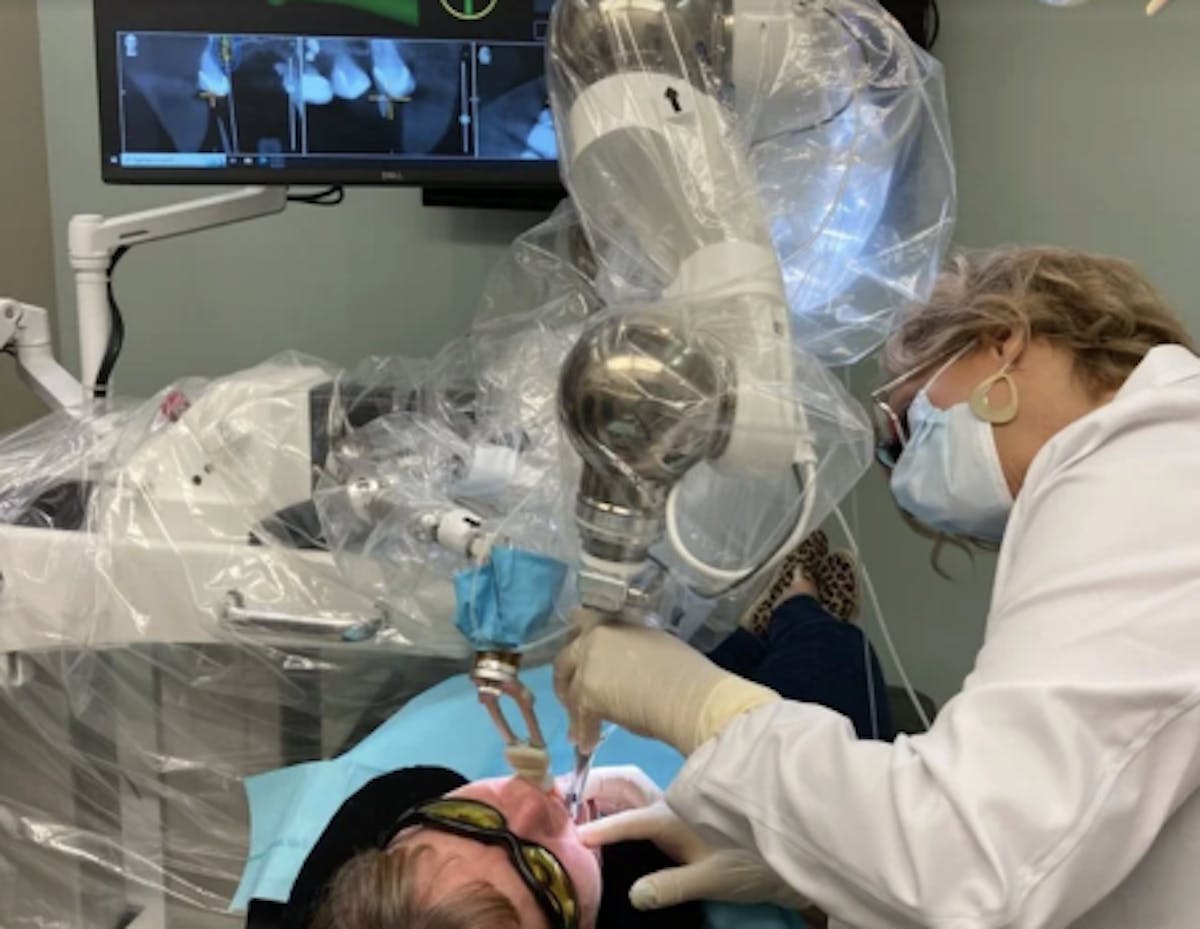
We place many implants with the YOMI dental robot, a computer-guided system that plans the exact position, angle, and depth of the implant before surgery and then guides the handpiece during it. The plan is built from a Planmeca ProMax 3D scan of your jaw, so the placement follows your own anatomy rather than a freehand estimate. Robot-assisted guidance means the implant can be set with submillimeter accuracy, which matters most when a nerve, a sinus, or a neighboring root sits close to the site. It also tends to mean smaller openings and less guesswork in the chair. The same YOMI-guided approach is used at our Huntsville implants practice.
For numbing, we use The Wand, a computer-controlled system that delivers anesthetic slowly and steadily instead of in one push. Patients who dread the pinch usually notice the difference. Implant surgery is often more comfortable than people expect, closer to a filling than an extraction for most single-tooth cases, because the bone itself has few pain nerves. If you want more than local anesthesia, ask about your sedation and comfort options at your consultation, and we will tell you whether you need it.
An implant is a small titanium post that acts as a replacement root. What goes on top depends on how many teeth are missing. Here are the options we plan for implant patients, with a plain description of who each one suits.
One implant, one crown. This is the standard fix for a single missing tooth, and it is the option that spares the healthy teeth on either side. A traditional bridge grinds down the two neighbors to anchor the replacement; an implant stands on its own, so those teeth are left alone. Once the crown is on, you brush and floss it like any other tooth.
When two or three teeth in a row are missing, we can support a bridge on two implants instead of one implant per tooth. It replaces several teeth without a removable partial and without leaning on your remaining teeth for support. Fewer implants than a per-tooth approach usually means a lower total cost for that stretch of the mouth.
If you already wear a denture, or prefer something removable, we can anchor it on a few implants so it snaps into place and holds. It stops the rocking and the pastes that full dentures are known for, while still lifting out for cleaning. This is usually the most economical way to stabilize a lower denture, which is the one that tends to give people the most trouble.
| Option | Best for | Fixed or removable | Spares neighboring teeth |
|---|---|---|---|
| Single-tooth implant | One missing tooth | Fixed | Yes |
| Implant bridge | Two to three teeth in a row | Fixed | Yes |
| Implant-supported denture | Full arch, want removable | Removable, snaps in | N/A (full arch) |
Ask which implant option fits you · (256) 529-5179
Implants take time, and most of that time is your body doing the work, not you sitting in a chair.
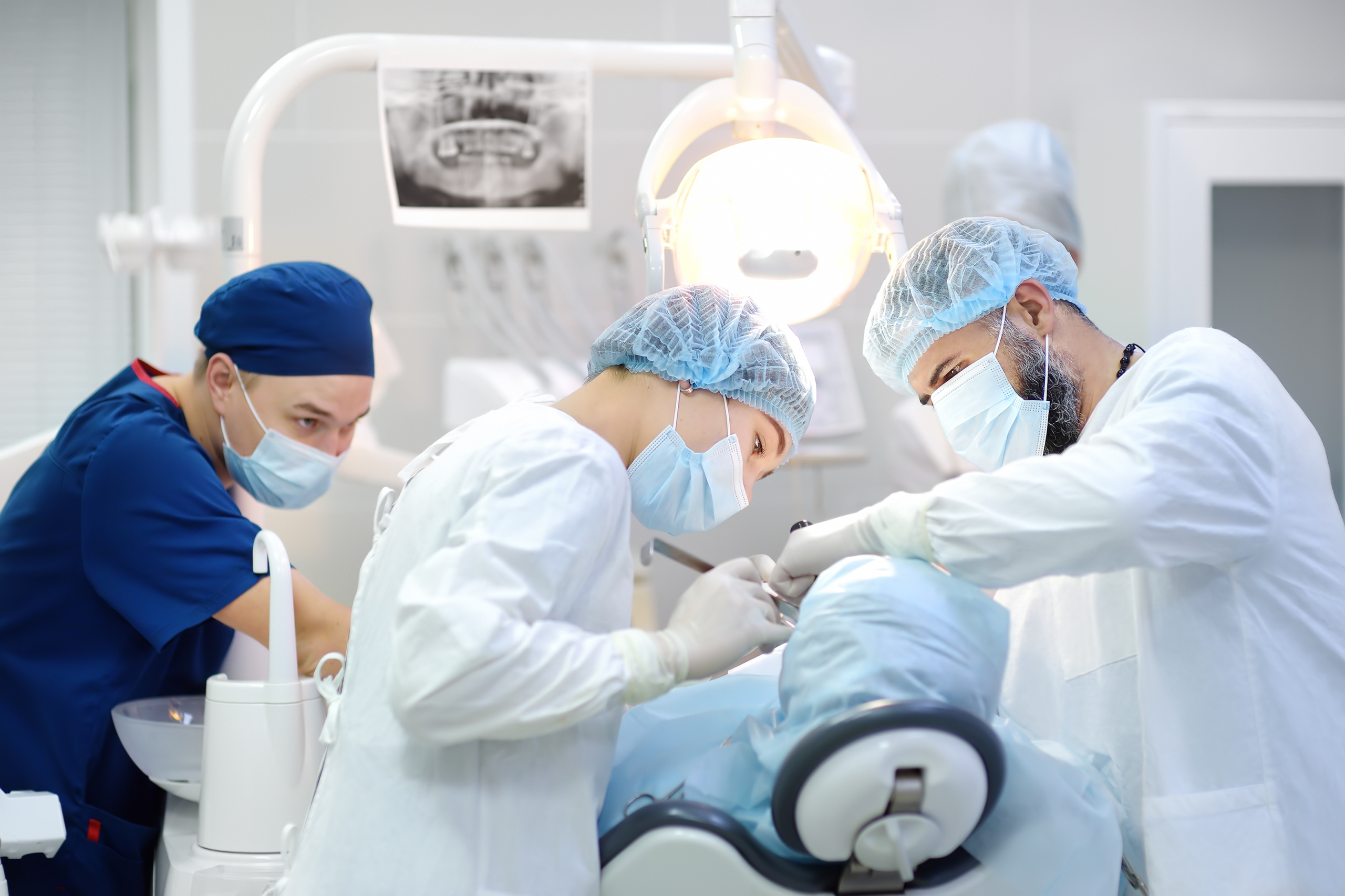
It starts with a consultation and a 3D scan of your jaw, which tells us whether there is enough bone and where the implant should sit. On placement day, the implant post is set into the bone, usually under local anesthesia with The Wand, and often with YOMI guiding the position. The gum is closed over or around it and left to heal. Once the implant has fused with the bone, we take an impression and your in-house-made crown, bridge, or denture is fitted on top. Some straightforward front-tooth cases allow a temporary tooth sooner, which we will tell you at planning.
Plan on three to six months from placement to the final tooth. The implant needs that time to fuse with the jawbone, a process called osseointegration, and rushing it is the main way an implant fails. Healing after the surgery itself is usually quicker than people fear: most patients manage the first few days with over-the-counter pain relief and are back to normal routines within a week. If you need a bone graft first, add a few months to the timeline before the implant goes in. Not everyone does. Whether a graft is needed depends mostly on how long the tooth has been missing and how much bone is left, which is exactly what the 3D scan shows us before anything is scheduled.
If you are missing a tooth, wearing a denture that moves, or facing an extraction, an implant is worth asking about before the bone starts to change. The longer a gap sits empty, the more the jaw shrinks underneath it, which can make an implant harder later. That is a reason to ask sooner, not a reason to panic.
Most adults in good general health are candidates. The main requirement is enough healthy jawbone to hold the implant, which the 3D scan checks up front. If you have lost bone from a tooth that was missing for years, a bone graft can often rebuild the site so an implant becomes possible. Well-managed conditions like diabetes are usually fine; heavy smoking and some medications can slow healing, so we go over your health history before recommending surgery. If an implant is not the right call for you, we will say so and lay out the alternatives.
Cost depends on how many teeth you are replacing, whether you need a graft, and which restoration goes on top, so we give you a written estimate after the consultation and scan. Ask us about insurance and financing options, and the front desk can run your benefits before you commit.
We are at 7736 Madison Blvd, Suite #2, Huntsville, AL 35806, on the Madison Boulevard corridor, close to the Hwy 72 shops. There is parking at the door. We also see patients at our Scottsboro office at 921 S Broad St.
Hours: Monday to Friday, 9am to 5pm. Closed Saturday and Sunday.
Phone: (256) 529-5179
Email: De***************@***il.com
You can also read patient reviews from our Madison and Scottsboro patients.
Implants are one part of what we do. For everyday needs, start here:
Not sure whether you need an implant, a bridge, or something simpler? Start with a consultation and we will point you to the right option.
Implant pricing depends on whether a bone graft is needed, how many teeth are involved, and the material of the final crown. We give Madison patients a written estimate after the consultation and 3D scan.
For most single-tooth cases, less than people expect, closer to a filling than an extraction. Bone has few pain nerves, and we numb the area with The Wand, a computer-controlled anesthetic system. Most patients handle the first few days with over-the-counter pain relief. Tell us if you are anxious and we will discuss comfort options before the appointment.
Plan on three to six months from placement to the final tooth. The implant needs that time to fuse with the jawbone, a process called osseointegration, before a crown can go on top. Recovery from the surgery itself is usually quicker, with most people back to normal within a week. If you need a bone graft first, add a few months.
Often yes, but it depends on your bone and your medications. Osteopenia means lower bone density, so we check the implant site closely with a 3D scan and review any bone medications you take, since some affect healing. Many patients with osteopenia are still good candidates, sometimes with a bone graft first. Dr. Barrilleaux will advise you after the exam.
Many can, especially when the condition is well managed. Autoimmune diseases and the medications used to treat them can slow healing, so we plan carefully and coordinate with your physician when needed. The success of the implant depends more on how controlled your condition is than on the diagnosis alone. We review your full health history before recommending surgery.
It refers to the spacing implants need to stay healthy, roughly a couple of millimeters between an implant and a neighboring tooth and a bit more between two implants, so the bone and gum between them survive. The exact spacing depends on your anatomy, which is why we plan every case from a 3D scan rather than a fixed rule. That planning is part of what YOMI guidance is for.
Ask about paying over time. Ask us about financing and insurance, and some medical or dental plans cover part of an implant. An implant-supported denture is usually the most economical way to replace several teeth. The front desk can run your benefits and lay out the numbers before you commit to anything.