Book your cosmetic consultation · (256) 529-5179 Request an appointment online
Most people who look for a cosmetic dentist have one tooth or one detail that bothers them. A chip that catches the light. A gap that shows up in every photo. Front teeth that have gone gray with age. That is the work we do most.

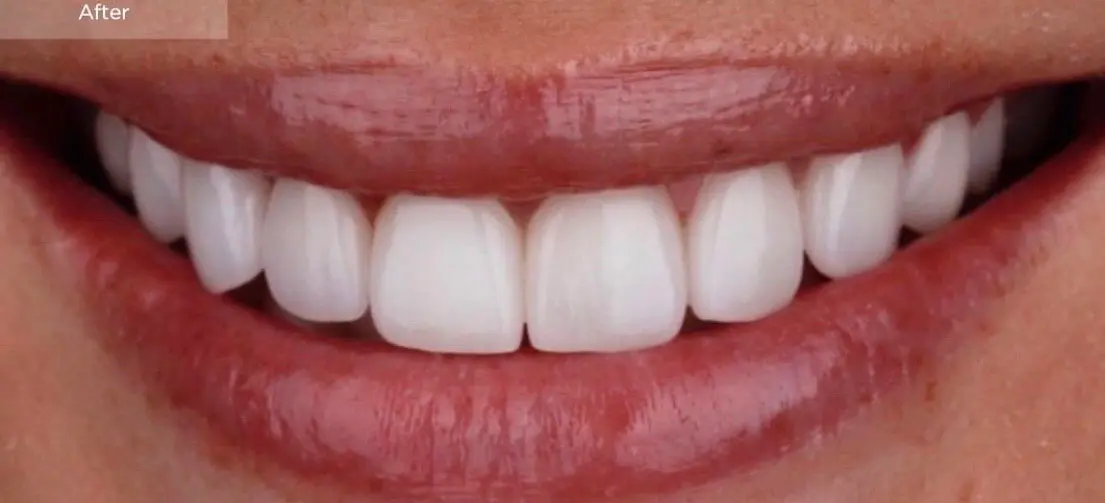
Photos show actual patients and are not a guarantee of any specific outcome.
Cosmetic dentistry has no license of its own. Any dentist can advertise it, which is why the field leans so heavily on one real credential: accreditation by the American Academy of Cosmetic Dentistry. Dr. Leslie Barrilleaux, DMD, holds it, and she is the only accredited cosmetic dentist in the state of Alabama. Fewer than 600 dentists nationwide have earned it. She has practiced for more than 25 years, after graduating with honors from the University of Louisville School of Dentistry.
Accreditation is not a weekend course. It takes a written exam, oral exams, and a set of finished cases judged by other accredited dentists on one question: does the result look real? That is exactly the question you are hiring a cosmetic dentist to answer. Dr. Barrilleaux plans and performs the cosmetic work herself. The practice also keeps its own dental lab on site, so much of the shaping and shade-matching happens down the hall instead of at an outside lab.
Two things shape how a case is handled here:
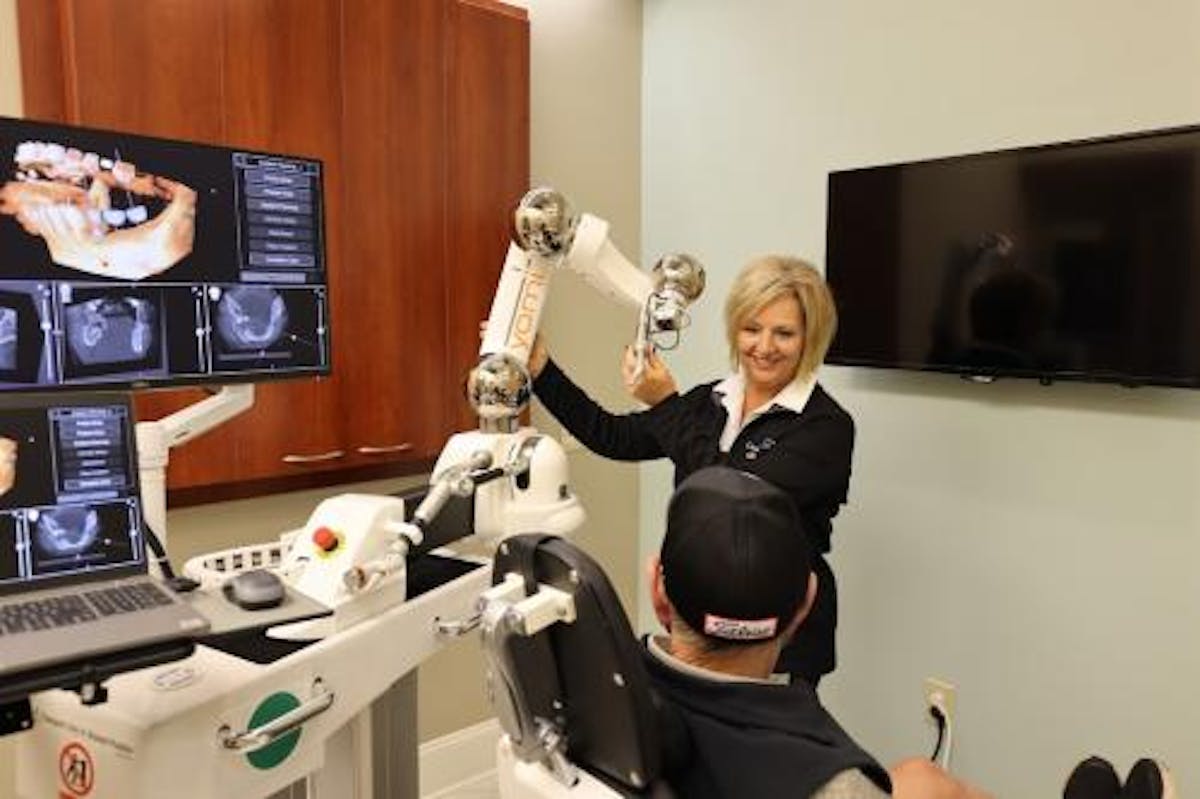
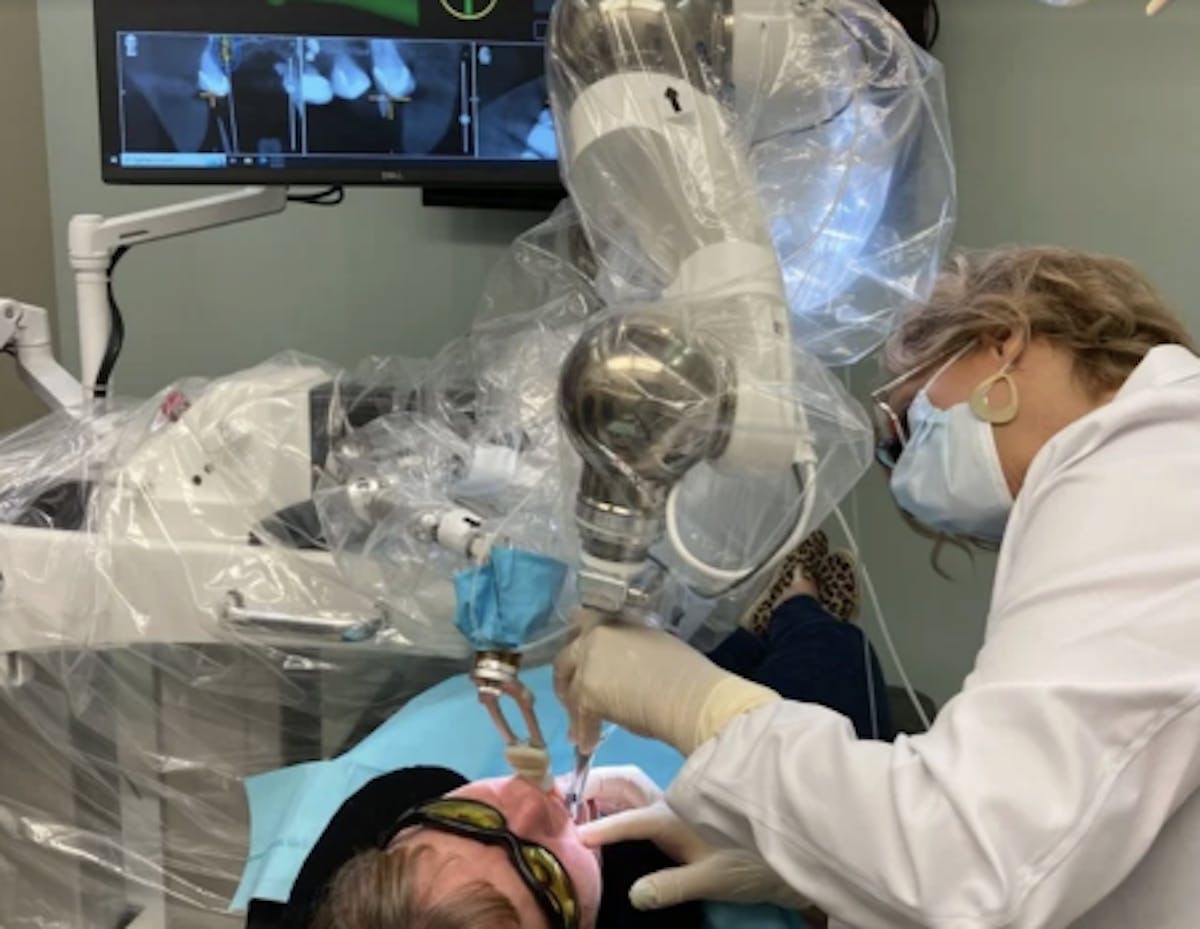
We use a Planmeca ProMax 3D unit for 3D imaging and case planning, a Fotona laser for soft-tissue work such as reshaping an uneven gum line, and The Wand for anesthesia, a computer-guided system that delivers numbing slowly so the pinch is easier to take. None of it is decoration. On front teeth, the planning matters as much as the hands.
Cosmetic dentistry is a category of treatments, not one procedure. Here is what Madison patients most often come in for, and what each one actually does. Most smile makeovers combine two or three of them.
Veneers are thin shells of porcelain bonded to the front of your teeth. They cover chips, close small gaps, straighten the look of slightly crooked teeth, and brighten a shade that whitening cannot reach. Because they are made in our lab, the shape and color are matched to your face rather than pulled off a shelf. Veneers usually take two visits: one to plan and prepare, one to bond the finished shells. For the full breakdown of porcelain versus composite, candidacy, and cost, see our veneers in Madison page.
Professional whitening lifts the stains that build up from coffee, tea, red wine, and age. In-office whitening works faster and goes further than a drugstore kit because the gel is stronger and your gums are protected while it works. We also make custom take-home trays that fit your teeth exactly, so the gel stays on the enamel instead of leaking onto your gums. Whitening does not change the color of veneers, crowns, or fillings, which is why we usually whiten before any cosmetic work is shade-matched. The full detail is on our teeth whitening in Madison page.
Bonding uses a tooth-colored resin to repair a chip, close a small gap, or reshape a tooth, all in a single visit. It is the least invasive cosmetic option and often the most affordable, because there is no lab step and usually little or no enamel to remove. The tradeoff is durability. Bonding resists stains and wear less well than porcelain, so it tends to be the right call for a small fix rather than a full front-tooth makeover. We will tell you when bonding is enough and when veneers will hold up better.
Clear aligners are removable, see-through trays that move teeth gradually. They suit mild crowding, spacing, or teeth that have drifted over the years. They are far less visible than metal braces, and you take them out to eat and brush. Treatment length depends on how much movement you need, commonly several months to a year or more. We offer Invisalign, and we set up an aligner plan made individually for you. Aligners fix the position of teeth. If you also want them whiter or reshaped, we often finish with whitening or bonding once they are straight.
A crown caps a tooth that is cracked, badly worn, or too damaged for a veneer, and it can be shaped and shaded to blend with the teeth around it. With our in-office scanner and mill, many crowns are designed, milled, and fitted in one appointment instead of two, so there is no temporary crown and no second trip. Crowns and veneers get confused often, so here is how they compare.
| Feature | Veneer | Crown |
|---|---|---|
| Covers | Front surface of the tooth | The whole tooth |
| Best for | Cosmetic fixes on healthy teeth | Cracked, weak, or heavily restored teeth |
| Tooth reduction | Less | More, to seat the cap |
| Main goal | Appearance | Strength, with appearance |
| Typical lifespan | About 10 to 15 years | About 10 to 15 years |
If a chip, a gap, staining, or the shape of a tooth is something you notice in photos or hide when you smile, a consult is the place to start. There is no medical urgency to cosmetic work, so the first step here is a conversation about what actually bothers you and which treatment fits.
Most adults are. The one requirement is a healthy foundation. Veneers and bonding need sound teeth and gums underneath, so if there is decay or gum disease, we treat that first. Heavy grinding matters too, because it can chip porcelain, and we may recommend a nightguard to protect the work. If you clench or have jaw pain, we check the bite before planning anything cosmetic. Teens are usually better suited to aligners than veneers, since young teeth are still changing.
Cost depends on which treatment you choose and how many teeth are involved, so we give you a written estimate before anything begins. Bonding is typically the lowest-cost option of the three. Most cosmetic treatment is elective, so dental insurance rarely covers it, though a crown placed to save a cracked tooth often is. Ask the front desk about CareCredit and Cherry financing before you commit.
Ask about a smile makeover · (256) 529-5179
You can also read patient reviews from our Madison and Scottsboro patients.
Each cosmetic treatment has its own page, and general care lives on the main hub:
Not sure where to start? Book a consult and we will map out the right sequence for your smile.
We are at 7736 Madison Blvd, Suite #2, Huntsville, AL 35806, on the Madison Boulevard corridor, just off I-565. There is parking right at the door. We also see patients at our Scottsboro office at 921 S Broad St.
Hours: Monday to Friday, 9am to 5pm. Closed Saturday and Sunday. Phone: (256) 529-5179 Email: De***************@***il.com
Yes, in practice, though not in license. Cosmetic dentistry is not a recognized specialty, so any general dentist can offer it. The real difference is training and proof: accreditation by the American Academy of Cosmetic Dentistry requires passing exams and submitting finished cases judged by peers. Dr. Leslie Barrilleaux is the only AACD-accredited cosmetic dentist in Alabama.
It depends on the treatment, since bonding, whitening, veneers, and crowns sit at very different price points. We give you a written estimate at your consult before any work starts. Call (256) 529-5179 and we will go through the numbers with you.
Usually not. Insurers treat work done purely for appearance as elective, so veneers, whitening, and cosmetic bonding are typically paid out of pocket. The common exception is restorative work: a crown placed to save a cracked or decayed tooth is often covered, even though it also looks better afterward. We check your plan before treatment starts and tell you what it will and will not pay.
It is shorthand cosmetic dentists use for how many veneers it takes to balance a smile: roughly four, eight, or ten, depending on how many teeth show when you talk and laugh. It is a rule of thumb, not a clinical standard, and it exists so no natural tooth ends up mismatched next to a veneer. The right number depends on your lip line and which teeth actually need work. Dr. Barrilleaux settles the count with you at the consult.
Often yes, but the bite comes first. TMJ trouble and grinding put stress on porcelain, so placing veneers before the bite is stable risks chipping the new work. We evaluate your jaw and bite before planning anything cosmetic, and we may recommend a nightguard to protect the result. Once the bite is under control, veneers are frequently still a good option.
Porcelain veneers and crowns commonly last about 10 to 15 years, and often longer with good care. Bonding has a shorter life, because the resin stains and wears faster than porcelain. What shortens any of them is grinding, biting hard objects, and skipping checkups. A nightguard and regular cleanings are the simplest way to protect the work.
Natural, when they are planned and matched well. The overdone look comes from veneers that are too white and too uniform for the face. Because our lab is in-house, Dr. Barrilleaux matches shade, shape, and translucency to your other teeth in person before anything is bonded. Judging that natural look is exactly what AACD accreditation tests.
Dr. Leslie Barrilleaux is the only AACD-accredited cosmetic dentist in Alabama, including Madison and Huntsville. Fewer than 600 dentists nationwide hold it. Our office is in Madison, on Madison Boulevard.