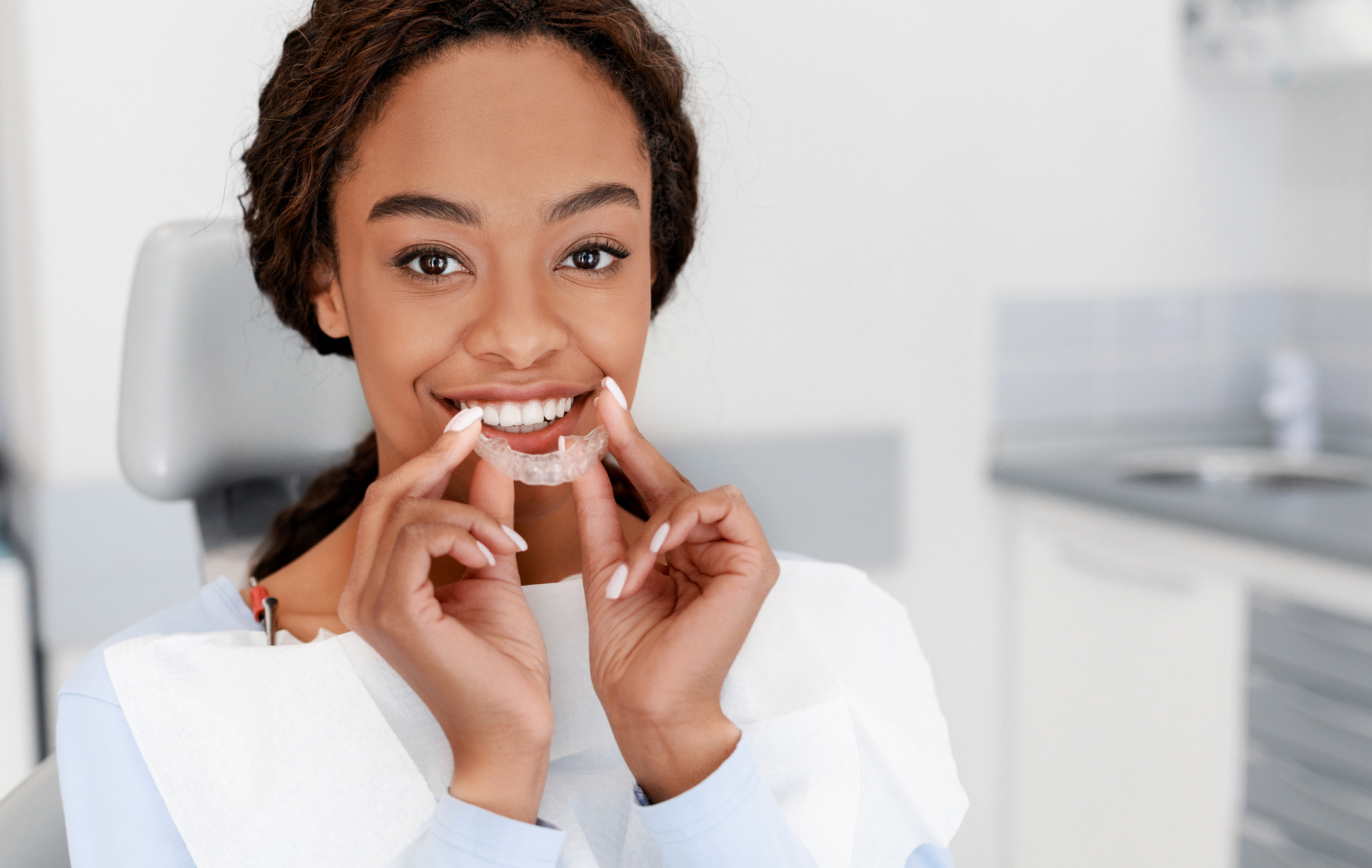
Our office is on Madison Boulevard, in Madison, and we also see patients from across Huntsville. Invisalign is a personalized treatment plan rather than a stock appliance. You wear a series of clear aligners that are made for your teeth, and each one moves them a little further than the last. There are no large metal brackets sitting on your front teeth. This orthodontic treatment option allows more adults to pursue a healthier, straighter smile, and it is an option many working adults consider when they do not want brackets and wires at 40.
At a glance: Invisalign straightens teeth with a series of clear, removable aligner trays instead of brackets and wires. You take them out to eat and to brush, so you can eat any food that you enjoy and clean your teeth normally. Dentistry Today provides Invisalign in Huntsville and offers CareCredit and Cherry financing with 0% APR options. Your exact price is given to you at the consultation, after we scan your teeth.
Aligners move teeth. They do not change the color of a tooth, rebuild a chipped edge, or repair years of wear. That is the part of the conversation most Invisalign pages leave out, and it is the reason a cosmetic dentist is worth considering for this work.
Dr. Leslie Barrilleaux, D.M.D. leads the practice on Madison Boulevard. She has been an Accredited member of the American Academy of Cosmetic Dentistry, and she is the only AACD-accredited cosmetic dentist in Alabama. Accreditation is held by fewer than 600 dentists nationwide. It is earned through written examination, submitted clinical cases and an oral examination, so it measures finished work rather than hours in a lecture room.
Straight teeth and a good-looking smile are not the same thing. If your front teeth are crowded and also worn, dull or chipped, aligners will solve the crowding and leave the rest exactly as it was. Straightening alone will not address the underlying problem, because finishing a smile with restorative work is not what an orthodontic specialist does. We can plan the aligners and the finish together, and then complete the case in the same office with teeth whitening or veneers if you want them. Some patients want nothing more than straight teeth, and that is a perfectly good answer too. The point is that you are not sent somewhere else to ask the question.
Both straighten teeth. The difference is in what treatment does to your life while it is happening.
| Invisalign | Traditional braces | |
|---|---|---|
| Appearance | Clear plastic trays. No large metal or brackets on your front teeth. | Metal brackets and wires, visible on the front teeth for the whole of treatment. |
| Removable | Yes. You take the aligners out yourself. | No. They are bonded on until the orthodontist takes them off. |
| Eating | You can eat any food that you enjoy. The aligners come out first. | Hard, sticky and chewy foods are restricted for the whole of treatment. |
| Cleaning your teeth | Remove the aligners and brush and floss normally. | Brushing and flossing around brackets and wires takes longer and is easier to do badly. |
| Speed | Faster than traditional braces. | Slower for comparable cases. |
| Cost | No more expensive than traditional braces. | Comparable. See the cost section below. |
Invisalign suits mild to moderate crowding, spacing and mild bite problems, which covers many of the adults who want straighter front teeth. It is not the answer to everything. A significant skeletal bite discrepancy, a badly rotated tooth or a case that needs teeth moved a long way through bone may still be treated better with fixed braces, and in some cases by an orthodontic specialist. We will tell you that at the consultation rather than start you on trays and hope.
This is the question almost everybody arrives with.
Invisalign publishes cost guidance on its own website. It states that the cost of Invisalign treatment is comparable to the cost of braces, and on its braces comparison page it states that without insurance, braces can cost between $3,000 and $7,500. Those are national figures from the manufacturer. They are not a quote from this office, and they are not a Huntsville average. What they do tell you is the shape of the number most people are working with. Invisalign in Huntsville is no more expensive than traditional braces.
Your own price depends on how far your teeth have to move and how many aligners that takes. A minor correction of two front teeth and a full arch of crowding are not the same piece of work and will not cost the same. We give you an exact written price at your consultation, after we have scanned your teeth and built the plan, and you decide with the real number in front of you.
Very few people pay for orthodontic treatment in one go, so we offer two financing routes and you can use either.
Our insurance and financing page covers both, and we will walk you through the application before you commit to anything.
Often, at least in part. Invisalign’s own site states that with dental insurance you may be covered up to $3,000 for orthodontic treatment, though the amount depends entirely on your plan and many plans cap orthodontic benefits for adults. Our insurance and financing page sets out the options. If you have a health savings account or a flexible spending account, orthodontic treatment is usually an eligible expense.
Ask us what your Invisalign will cost, (256) 529-5179
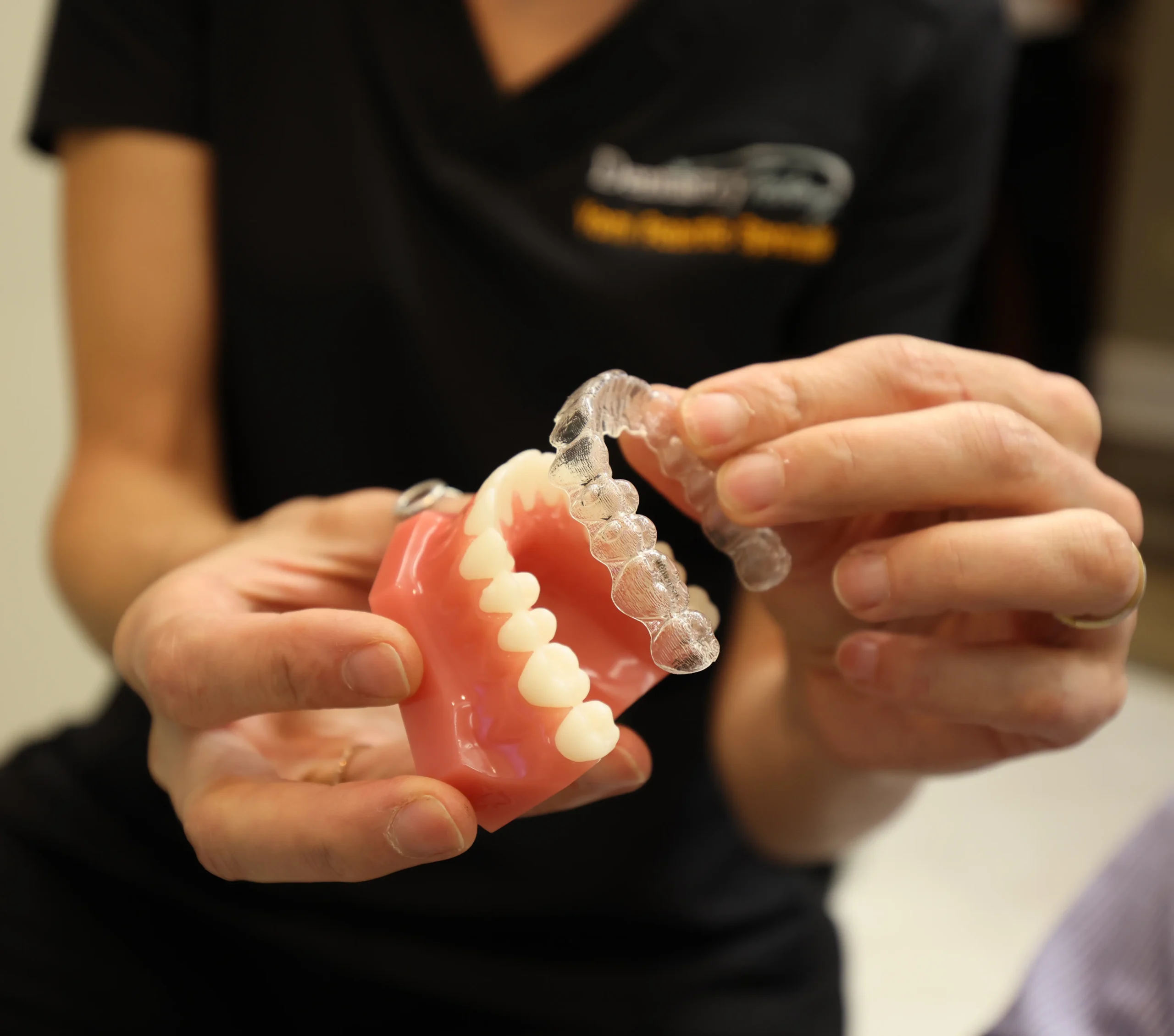
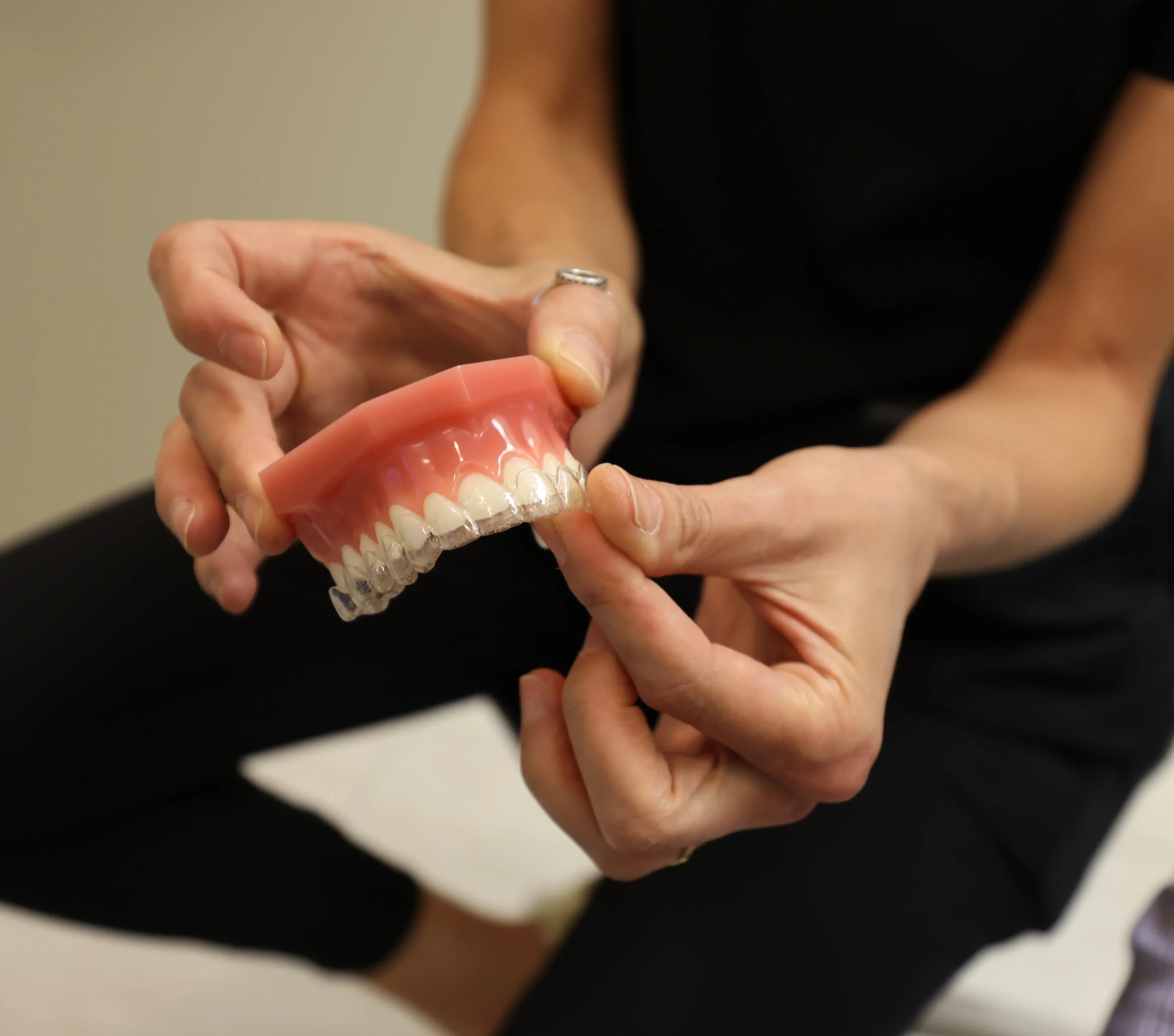
Nothing is ordered and nothing is worn until your teeth have been scanned and you have seen where the plan is going to take them.
The first appointment is an examination and a scan. We use a Planmeca ProMax 3D imaging system in the Madison Boulevard office, and the images give us a three-dimensional view of your teeth and jaws rather than a flat picture. From that we build a personalized treatment plan: which teeth move, in what order, and how many aligners it will take. You see the plan and the price before you agree to anything.
Each aligner is worn until the next one in the series takes over. Invisalign’s own guidance is that people typically wear the aligners 20 to 22 hours a day, which means they come out to eat, to drink anything other than water, and to brush. That is the whole discipline of aligner treatment, and it is also the catch: an aligner sitting in a case on your desk is not moving anything. People who wear them as directed do well. People who do not, do not.
Faster than traditional braces. We are not going to put a month count on this page, because the length depends on your teeth, and any figure published here would be a guess dressed up as a fact. Some cases are short and some are long. You will be given a realistic timeline at the consultation, once the scan shows how far your teeth have to travel. Our blog post on how long Invisalign takes goes through what makes one case slower than another.
Teeth drift. They drift after braces, they drift after aligners, and they drift for the rest of your life if nothing holds them. A retainer is what keeps the result you paid for, and it is part of orthodontic treatment rather than an afterthought or an upsell. Your retention plan is set out at the end of your case, and you are told plainly how much you need to wear it. This is the single most common reason people end up back in aligners years later.
The objection is almost always the same one: you have a job, you speak to people, and you do not want to spend two years with a mouthful of metal at 45. That is exactly the problem clear aligners solve. There is no metal on your front teeth, most people will not notice you are wearing them, and you take them out for the lunch meeting if you want to. Crowding also tends to get worse with age rather than better, so the teeth you have been ignoring since your twenties are unlikely to sort themselves out.
Clear aligners are used for teenagers as well. Whether they are the right choice for a particular teenager depends less on the teeth than on whether the aligners will actually be worn. You will get a straight answer about that at the consultation, rather than a case taken regardless.
We serve patients across Huntsville, including Blossomwood, Jones Valley, Hampton Cove, Meridianville and Owens Cross Roads. The Madison Boulevard office is convenient to all of them. For more on clear aligners in Madison, see our cosmetic dentist in Madison, AL page. Invisalign sits alongside the rest of our cosmetic dentistry in Huntsville, so if straightening is one part of what you want changed, we can plan the whole thing at once.
Dentistry Today 7736 Madison Blvd, Suite #2 Huntsville, AL 35806 Phone: (256) 529-5179 Hours: Monday to Friday, 9am to 5pm. Closed Saturday and Sunday.
Book your Invisalign consultation, (256) 529-5179
There is no single Alabama figure, and no page can give you a reliable Alabama figure. Invisalign states that the cost of Invisalign treatment is comparable to the cost of braces, and on its braces comparison page that without insurance, braces can cost between $3,000 and $7,500. That is national manufacturer guidance rather than our quote. Invisalign in Huntsville is no more expensive than traditional braces, and you receive an exact written price at your consultation once your teeth have been scanned.
No. It sits inside the normal range for this treatment. Invisalign says its own cost is comparable to braces, and on its braces comparison page puts braces at $3,000 to $7,500 without insurance, so a quote at that level is unremarkable. What matters more than the headline number is what the quote includes, whether retainers are part of it, and what your insurance will actually pay. Ask any practice for the price in writing, including retention, before you compare it to anyone else.
Mail-order aligners bought direct from a company online are the cheapest, and they are cheaper for a reason. Nobody examines your teeth and gums in person, nobody takes an x-ray, and nobody is watching the roots and the bite while the teeth move. Aligners are strong enough to cause real harm if they are used on the wrong case, which is why we do not recommend treating an orthodontic problem without an in-person examination. If cost is the barrier, financing is the better answer than skipping supervision: our financing page covers Cherry with 0% APR options and CareCredit.
Often, at least in part. Invisalign’s own website states that with dental insurance you may be covered up to $3,000 for orthodontic treatment, but the real figure depends on your plan, and many plans cap orthodontic benefits or limit them by age. Our insurance and financing page sets out the options, so that you know where you stand rather than finding out later. Health savings and flexible spending accounts can usually be used as well.
Mild underbites, often yes. Clear aligners can correct a slight underbite where the problem is the position of the teeth themselves. A significant underbite is usually skeletal, meaning the lower jaw sits forward of the upper one, and moving teeth alone will not change the position of a jaw. Severe cases can need fixed braces, an orthodontic specialist, or in some instances surgery. Which of those describes you is decided by an examination and a scan, not by a page on the internet.
We do not treat by rules of thumb, and we are not going to define one here as though it settled how you wear your aligners. The guidance that matters comes from Invisalign itself: people typically wear the aligners 20 to 22 hours a day. In practice that means they come out only for as long as it takes to eat, to drink something other than water, and to brush your teeth, and then they go straight back in. Time spent out of the mouth is time your teeth are not moving. If you are asking because you are worried about a long meal or a missed hour, tell us at your review appointment and we will look at where you actually are.
Invisalign is not a treatment for TMJ disorders, and we will not tell you that it is. Jaw joint pain has several possible causes, including clenching, grinding, arthritis and injury, and the bite is only one of them. Where a bite problem is genuinely contributing, correcting the alignment of the teeth may ease some symptoms for some people, and it may do nothing at all for others. This is assessed case by case, with an examination, before anybody promises you relief. If jaw pain is your main complaint, tell us that at the consultation and we will start there rather than with aligners.