

Quick answer: Can you get veneers without shaving your teeth?
Yes. No-prep veneers such as Lumineers, DURAthin, and Vivaneers, along with composite bonding, can improve your smile with little or no enamel removal. They work best for small, worn, or slightly gapped teeth. They are not ideal for crowded, protruding, or deeply stained teeth, where some preparation is usually needed.
If you have been researching veneers without shaving teeth, the short answer is yes, they exist. No-prep and minimal-prep veneers are specifically designed to bond directly to your natural teeth with little or no enamel removal. They are not the right choice for every patient, but for the right candidate they offer a genuinely conservative path to a better smile. This article breaks down how they work, who qualifies, and what to realistically expect.
What "No-Prep" Veneers Actually Are
The word "shaving" is patient language. Dentists use the term "preparation" or "tooth reduction," and the amount of that reduction is exactly what separates veneer types.
Traditional porcelain veneers require removing approximately 0.5 to 0.7 mm of enamel from the front surface of each tooth. That sounds small, but your front-tooth enamel is only about 1 to 2 mm thick to begin with, so traditional prep can consume 25 to 50 percent of the enamel on thinner areas. That removal is permanent and irreversible.
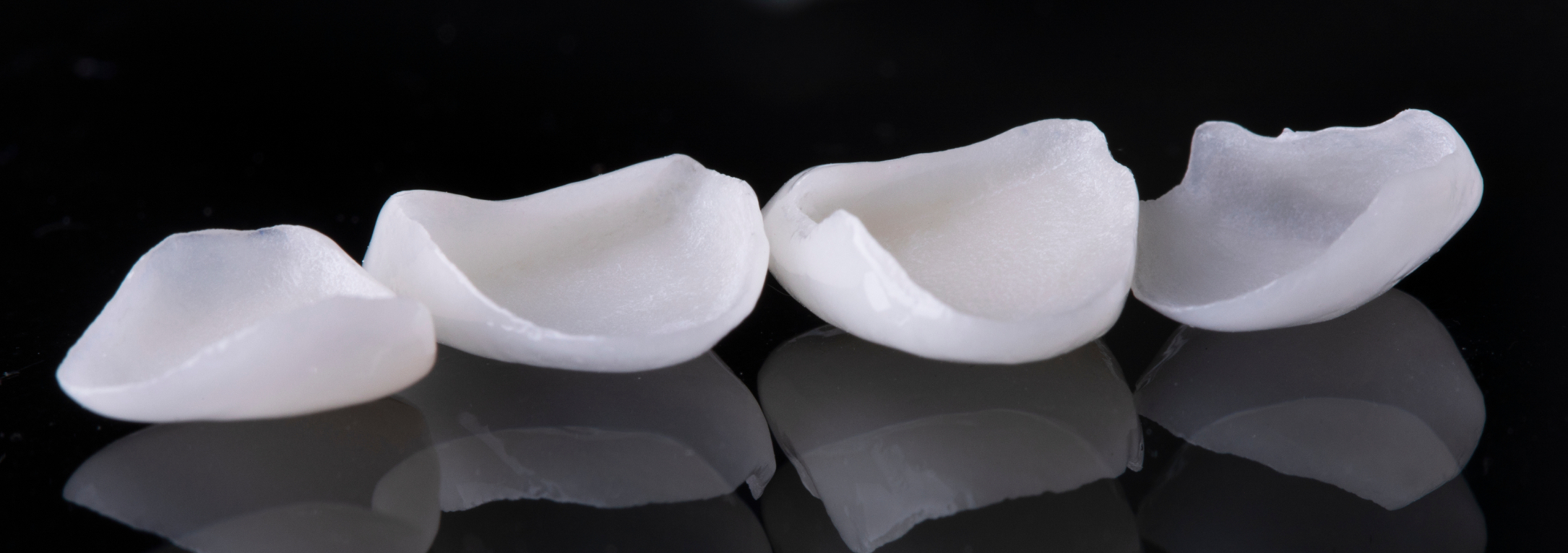
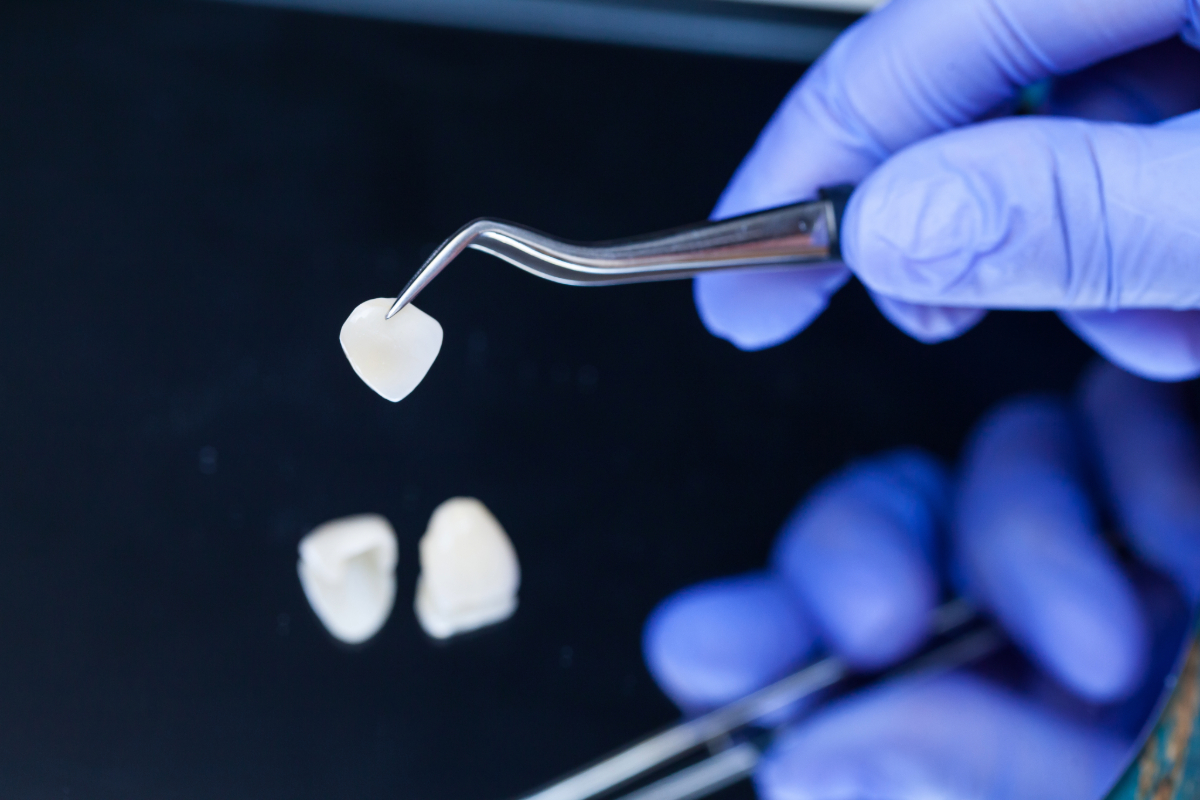
No-prep veneers solve this by being made ultra-thin, typically 0.2 to 0.3 mm, roughly the thickness of a contact lens. Because they are so thin, they can bond to your unaltered tooth surface without adding visible bulk (in the right candidate). Brands like Lumineers (DenMat, 0.2 to 0.33 mm), DURAthin (also DenMat, approximately 0.2 to 0.3 mm), and Vivaneers (Glidewell Laboratories, 0.3 mm) are the most recognized examples.
Minimal-prep veneers sit between the two. A small incisal edge adjustment may be made, but prep stays entirely within enamel and never reaches dentin. According to the clinical definition used by Style Italiano, minimal-prep involves up to 0.5 mm of ceramic addition and only the most conservative enamel adjustment. "No-prep" and "minimal-prep" are often used interchangeably in marketing, so ask your dentist exactly what they mean.
One note worth knowing: even no-prep placement involves a light acid etch of the enamel surface to create micro-texture for bonding. This is not "shaving" and does not remove measurable tooth structure, but it is a clinical step.
No-Prep vs Traditional Veneers vs Composite Bonding
Three main options exist for no-shave or minimal-shave smile improvement. The table below uses research-sourced figures labeled as typical US ranges; costs vary by dentist, location, and case complexity.
| Option | Tooth Prep / Shaving | Reversible? | Typical Longevity | Best For | Typical Cost Per Tooth (US) |
|---|---|---|---|---|---|
| No-prep porcelain (e.g., Lumineers, DURAthin, Vivaneers) | None (light etch only) | More reversible than traditional; minor surface change possible during removal | 10 to 20 years (porcelain); clinical study mean success 10.28 years | Small, worn, or retruded teeth; minor gaps; mild discoloration | $1,500 to $2,500 (varies) |
| Minimal-prep porcelain | Minimal, within enamel only | Partially reversible | 10 to 15 years typical | Slightly wider candidacy than no-prep; more shape correction possible | $900 to $2,500 (varies) |
| Traditional porcelain veneers | 0.5 to 0.7 mm enamel removed (permanent) | No | 10 to 15 years; up to 20+ with good care | Severe discoloration, crowding, large cosmetic changes | $925 to $2,500 (national avg. ~$1,765) |
| Composite bonding | Minimal to none | Yes | 3 to 10 years (typically 5 to 7) | Minor chips, small gaps, slight discoloration; budget option | $250 to $600 (varies) |
Composite bonding deserves special mention as the most accessible no-prep alternative. It is applied chair-side in a single visit with no lab time, making it a lower-cost way to test a cosmetic improvement before committing to porcelain. The trade-off is durability: composite resin is more porous than porcelain and stains over time from coffee, tea, and red wine. It also typically needs polishing or replacement sooner.
Are You a Good Candidate?
No-prep veneers are not a universal option, and this is the section most patients wish someone had explained clearly before their consultation.
In practice, only a minority of patients, often estimated at around 1 in 10, are true candidates for fully no-prep veneers, with roughly 6 in 10 qualifying for minimal-prep. That means the majority of cosmetic veneer cases still require some enamel reduction to achieve a natural-looking result.
Good candidates tend to share these characteristics:
- Small or naturally worn-down teeth, where adding 0.2 to 0.3 mm of porcelain restores appropriate volume
- Retruded (set-back) teeth, where added thickness brings the smile forward to a natural position
- Minor gaps between teeth (diastema), one of the primary clinical indications
- Mild surface discoloration that has not responded to whitening
- Straight or near-straight teeth with no significant crowding
Poor candidates include:
- Patients with crowded, overlapping, or protruding teeth. Adding material to already-prominent teeth makes them look bulkier, not better, and no-prep cannot address the underlying alignment.
- Patients with deep intrinsic discoloration (tetracycline staining, fluorosis, or dark gray coloring). No-prep veneers are too translucent to block out this kind of staining. Traditional veneers or alternative treatments are needed.
- Patients with active bruxism (teeth grinding). Published clinical research shows veneer success rates can fall to roughly 60 percent in patients with active bruxism, and most veneer fractures occur in grinders. Bruxism was a specific exclusion criterion in a 7-year clinical study of no-prep composite veneers. If you grind your teeth, this needs to be discussed honestly before any veneer type is considered.
- Patients with large existing restorations or insufficient remaining enamel.
The key principle, as stated in clinical literature, is that no-prep is contraindicated whenever the desired shape cannot be achieved solely by adding material to the tooth. If adding would look unnatural or alter your bite, some preparation is required.
What No-Prep Veneers Can and Can't Fix
No-prep and minimal-prep veneers are genuinely useful for a specific set of cosmetic concerns. They can improve tooth color, close minor gaps, smooth chipped or slightly uneven edges, and enhance overall smile symmetry. For patients with naturally small or worn teeth, the added volume that comes from a thin porcelain shell is actually cosmetically appropriate.
What they cannot do is equally important. No-prep veneers add material; they cannot remove it. They will not move teeth, correct a misaligned bite, or make crowded teeth appear straight. If alignment is the primary concern, clear aligners or braces address the root cause in a way veneers never can.
Dark underlying staining is another firm limitation. Ultra-thin porcelain is translucent by design, which gives it a beautiful, natural appearance, but it cannot mask deep intrinsic discoloration. Patients who have tried no-prep veneers on heavily stained teeth often report the discoloration showing through, which defeats the purpose and adds unnecessary cost.
Active gum disease or tooth decay must be resolved before any veneers are placed. A cosmetic result on a compromised foundation does not last.
Are They Reversible? And Do They Look Bulky?
Both of these questions deserve a direct and honest answer, because the marketing around no-prep veneers tends to oversimplify them.
On reversibility: no-prep veneers are significantly more reversible than traditional veneers, because no enamel is permanently removed during placement. In principle, the natural tooth structure is intact under the veneer and the veneers can be removed. In practice, removal is a clinical procedure, and the bonding and debonding process can cause minor surface changes to the enamel. It is not as simple as peeling off a sticker. Traditional veneers, by contrast, are never reversible under any circumstances because the enamel is gone.
On bulk: this is the most common complaint about no-prep veneers applied to the wrong patient. Adding 0.2 to 0.3 mm of porcelain to teeth that are already at normal or large size makes them protrude forward and can create what patients describe as a bulky, thick, or horse-like appearance. On the right patient (small, worn, or retruded teeth), that same 0.2 to 0.3 mm adds exactly the right amount of volume and looks completely natural. Patient selection is the single biggest factor in whether no-prep veneers look beautiful or unnatural. Ask to see before-and-after photos of patients with a similar starting point to your own.
How Long They Last and What They Cost
Longevity for no-prep porcelain veneers is comparable to traditional porcelain when patient selection and care are appropriate. A prospective clinical study following 186 veneers over a mean period of 9 years found that minimally invasive veneers achieved a mean success period of 10.28 years, slightly higher than conventional veneers at 9.32 years (a statistically significant difference). A separate 7-year study of no-prep composite veneers found a 91.3 percent survival rate at 84 months. These are typical study ranges; individual results vary with care habits, diet, and whether you grind your teeth.
Composite bonding lasts 3 to 10 years (typically 5 to 7) and stains more easily than porcelain over time.
On cost, typical US ranges are:
- Lumineers: $1,800 to $2,500 per tooth (typical, varies)
- DURAthin: $1,600 to $2,200 per tooth (typical, varies)
- Vivaneers: $1,500 to $2,000 per tooth (typical, varies)
- Traditional porcelain veneers: $925 to $2,500 per tooth (national average approximately $1,765)
- Composite bonding: $250 to $600 per tooth (typical, varies)
Dental insurance typically does not cover veneers because they are considered cosmetic treatment. Check your specific plan, and ask about financing options during your consultation.
Frequently Asked Questions
Do all veneers require shaving your teeth down?
No. Traditional porcelain veneers do require removing approximately 0.5 to 0.7 mm of enamel, which is permanent. No-prep veneers, including Lumineers, DURAthin, and Vivaneers, bond directly to the unaltered tooth surface with no shaving. Minimal-prep veneers involve only the lightest enamel adjustment, staying entirely within enamel. Whether any shaving is needed depends on your tooth size, position, and cosmetic goals.
Can you get porcelain veneers without shaving your teeth?
Yes, if you are a suitable candidate. Lumineers, DURAthin, and Vivaneers are all porcelain veneer products designed for placement without tooth shaving. They are made ultra-thin (0.2 to 0.3 mm) so they can bond to the natural tooth surface without adding visible bulk. Not everyone qualifies: patients with normal or larger teeth may see a bulky result, and those with deep discoloration may not achieve the color change they want.
Are your teeth shaved down for veneers?
It depends on the type. Traditional veneers: yes, approximately 0.5 to 0.7 mm of enamel is permanently removed. No-prep veneers: no shaving, though a light acid etch is applied for bonding purposes. Composite bonding: also no shaving. The word "shaved" is how patients usually describe it; dentists use the term "preparation" or "tooth reduction."
Do teeth have to be filed down for veneers?
For traditional veneers, filing is standard because the veneer shell needs space to sit flush with the natural tooth profile. For no-prep veneers, the shell is made thin enough that no filing is required. Composite bonding similarly requires no filing. The filing step in traditional veneers is what makes them permanent and irreversible.
Are no-prep veneers reversible?
More reversible than traditional veneers, but not completely reversible. Because no enamel is removed during placement, the natural tooth structure remains intact under the veneer. Removal is still a clinical procedure, and the bonding and debonding process can cause minor surface changes to the enamel. Traditional veneers permanently remove enamel and cannot be reversed under any circumstances.
Do no-prep veneers look bulky or unnatural?
They can, and this is the most documented complaint when they are placed on the wrong patient. No-prep veneers add 0.2 to 0.3 mm to the front of your teeth. On small, worn, or retruded teeth, this added volume looks natural and proportional. On teeth that are already full-sized or forward, that same addition creates a thick, protruding appearance. Proper candidate selection by an experienced cosmetic dentist is what separates a natural-looking outcome from one that looks overdone.
How long do no-prep veneers last?
Porcelain no-prep veneers typically last 10 to 20 years with proper care. A prospective clinical study of 186 veneers found a mean success period of 10.28 years for minimally invasive veneers. Composite no-prep veneers last approximately 5 to 10 years, with a 91.3 percent survival rate at 7 years found in a separate clinical study. Longevity is affected by oral hygiene, diet, whether you grind your teeth, and how well you care for your veneers at home.
Is composite bonding a good alternative to no-prep veneers?
For minor cosmetic issues on a tighter budget, yes. Composite bonding requires minimal to no tooth prep, costs $250 to $600 per tooth (typical, varies), and can be completed in a single visit with no lab time. The trade-offs are longevity (3 to 10 years versus 10 to 20 for porcelain) and staining: composite resin absorbs pigments from coffee, tea, and red wine more readily than porcelain does. It is an excellent option for small chips, minor gaps, or as a trial run before committing to porcelain veneers.
Considering veneers in Huntsville or Scottsboro? Our team can tell you whether no-prep, minimal-prep, or traditional veneers suit your smile. Learn more about our veneers and cosmetic dentistry, or schedule a consultation.
Medical disclaimer
This article is for general educational purposes and does not substitute for professional dental advice. Only a qualified dentist can evaluate whether no-prep, minimal-prep, or traditional veneers are appropriate for your specific teeth, bite, and goals.
Dr. Leslie Barrilleaux is Alabama’s only Accredited Cosmetic Dentist and the founder of Dentistry Today in Huntsville and Scottsboro. She’s passionate about helping patients feel confident in their smiles through personalized, modern dental care.